Expert Squatter Removal Services in Westchester County & White Plains: Notarized Lease Agreements and Document Delivery Assistance

Westchester County Leases for Removal of Squatters

If you own property in Westchester County or White Plains and have had your home or building occupied by squatters, you know how difficult it can be to remove them legally. As the New York Post reported, “Homeowners who go on vacation or a business trip, even for just a week, are returning to find their houses overtaken by trespassers who fraudulently claim a right to be there.”

Squatters in New York can actually gain legal rights to remain on a property through the principle of adverse possession if certain requirements are met over time. The Post explains: “In New York state, a homeowner faced with a trespasser can expect eviction to take two years. Meanwhile, the owner is barred from turning off utilities, removing belongings or doing anything else to get the invaders out.”

At White Plains Apostille & Mobile Notary, we understand the urgency of these situations for property owners. That’s why we charge minimum travel fees of $350 and usually slightly higher to notarize new lease agreements as part of the legal process for landlords to reclaim their properties from squatters. Here’s why our fee is higher than a standard $99 to $199 travel fees for notarization:

  1. Likelihood of Court Appearance
    Once squatters establish tenancy rights after 30 days in NYC or 10 years elsewhere, landlords must go through formal housing court evictions, which are severely backlogged. Our notaries may have to validate the notarized lease during these proceedings.
  2. Thorough Screening and Vetting
    To ensure the lease’s validity cannot be challenged, we carefully screen all parties, verify identities, confirm the landlord’s ownership, and ensure the new tenant will actively take possession and pay rent.
  3. Prioritization and Rapid Response
    Our premium fee guarantees prioritized scheduling so a notary can swiftly notarize the lease before adverse possession rights fully take hold, which the Post warns is a growing danger: “Criminals from south of the border are coming in droves to plunder the far wealthier United States.”
  4. Stringent Document Handling
    We treat these leases similar to our loan signing agent services for banks like JPMorgan Chase and Citibank. Our notaries ensure proper printing, scanning, and execution of all documents to stringent standards, so their validity is defect-free and can withstand any court challenges.
  5. Assisting Mortgage Lenders
    In addition to working with property owners, our mobile notaries have collaborated with major mortgage lenders and banks to assist them in removing squatters from foreclosed properties they need to take possession of. We understand the unique requirements when dealing with these types of properties.

The premium fee accounts for these critical factors missing from a simple $99 travel fee for notarization. It reflects the urgency required once squatters gain tenancy rights, which can happen in as little as 30 days in NYC based on laws like this in the NYC Administrative Code:

“Any person who…holds over and continues in possession of any premises after being duly notified to quit the same shall be liable to pay double the monthly value of the premises so detained for so long as the same shall be detained.”

In Westchester County, the laws are similarly strict in the Westchester County Laws & Codes Ordinances:

“A person is guilty of criminal trespass when he knowingly enters or remains unlawfully upon premises. Criminal trespass is a violation.”

While our fee of $350+ is a premium rate, for notary travel fees (remember we are not attorneys – we work with your attorney), it provides landlords and mortgage lenders a completely valid, legally binding lease that allows them to efficiently regain control and remove squatters through proper court filings. This avoids costly legal battles like those the Post warns against: “Favoring intruders over owners are ‘takings’ that violate the Fifth Amendment.”

We urge any property owners or mortgage lenders dealing with squatters to act quickly before adverse possession rights permanently take hold. Contact us today to get a notary mobilized and start the process to reclaim your property through an airtight lease agreement that will withstand any court challenges.

This article deals with:

  1. Squatters
  2. Removal of squatters
  3. Westchester County
  4. White Plains
  5. Squatter eviction process
  6. Adverse possession rights
  7. Notarization
  8. Lease agreements
  9. Property owners
  10. Mortgage lenders
  11. Legal process
  12. Housing court evictions
  13. NYC Administrative Code
  14. Westchester County Laws & Codes Ordinances
  15. Notary services
  16. Document handling
  17. Court filings
  18. Priority scheduling
  19. Swift response
  20. Airtight lease agreement

Apostille My Passport

These instructions apply to Westchester County.

Looking to apostille (authenticate) your passport for a potential employer or university? This could be a confusing process unless you know this simple step.

First, make a good quality color photocopy of your passport, including your photo and signature page. In some instances, the requester may want to see all the pages so they can track where you’ve been. In this case, your apostille might contain 20+ pages.

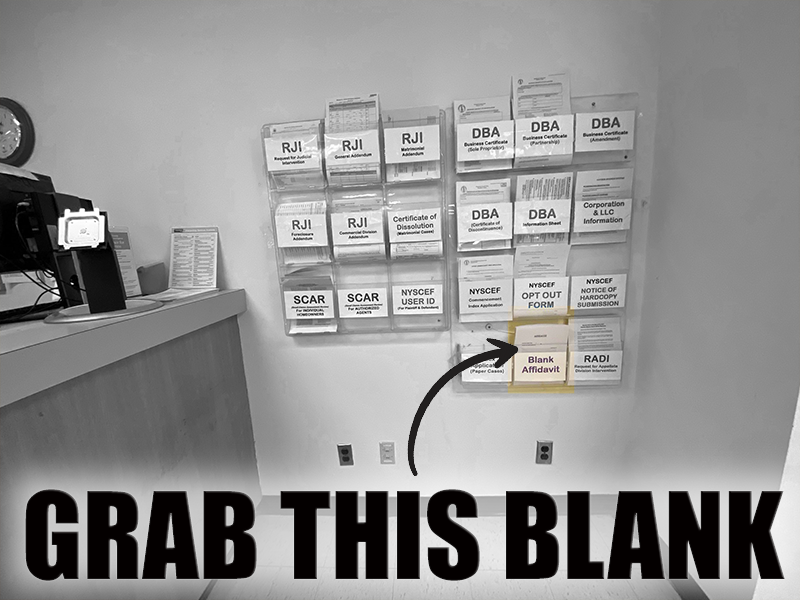
Head over to the Westchester County Clerk at 111 Martin Luther King Blvd. in White Plains. Grab the “Blank Affidavit” from the wall or just ask the clerk, “I need an affidavit to authenticate a document.”

You’ll enter the passport number on the affidavit and sign the paper in front of the clerk, essentially guaranteeing to the recipient that this is an exact copy of your passport. One of the clerks will notarize your affidavit for free.

Once that’s done, they’ll hand you the New York State Department of State Apostille Request form. You’ll fill that out and enclose a check or money order for $10 and a self-addressed stamped envelope.

That’s it! Once you mail it to Albany, you can likely expect it back in about 3 weeks.

Need it faster or don’t want to deal with any of this? Upload a color copy of your passport, and we’ll take care of everything for $149 from start to finish. Want it done in just a day or two? We can do that too!

Call, text, or WhatsApp 7 days a week to (914)441-2444 or begin your apostille application here: apostilleapply.com.

Avoid Third-Party Background Check Companies

Why You Should Avoid Third-Party Background Check Companies for Dual Citizenship Applications.


An Interview with Harry Otto, Lead Expediter at White Plains Apostille and Mobile Notary.

As one of the lead expediters at White Plains Apostille and Mobile Notary, Harry Otto has processed thousands of dual citizenship applications for well over 50 countries. One of the most frequent questions he receives from applicants is about the type of background check that should be submitted to embassies and consulates. In this article, Harry addresses these concerns and explains why White Plains Apostille and Mobile Notary strongly advises against using third-party background check companies, especially for sensitive applications such as dual citizenship.

The Risks of Using Third-Party Background Check Companies
“Third-party background check companies operate outside of the rigorous standards and oversight applied to federal agencies, leading to a high rate of inaccuracies, data breaches, and FCRA violations,” says Harry. “These issues can jeopardize your dual citizenship application and put your personal information at risk.”

  1. Inaccuracies and Their Impact:
    A 2012 study by the National Consumer Law Center found that 65% of consumers who disputed an error in their background check report still had an inaccuracy after the dispute process (National Consumer Law Center). Harry points out that companies like Checkr, GoodHire, and Accurate Background have faced numerous complaints regarding inaccuracies in their reports, leading to job disqualifications and other serious consequences for individuals.
  • Checkr: Users have reported issues with the length of time Checkr takes to verify information, sometimes causing significant delays in employment opportunities. Complaints also highlight problems with incorrect information being reported, leading to job disqualifications based on outdated or erroneous criminal records (Better Business Bureau) (Checkr).
  • GoodHire: Users have reported cases where major criminal records were missed, which later caused serious employment problems. Additionally, GoodHire has been criticized for not adequately verifying information and making it difficult to get timely corrections to inaccuracies (Privacy Rights Clearinghouse) (Better Business Bureau) (NerdWallet: Finance smarter).
  • Accurate Background: Accurate Background has been reported for data security issues and slow response times to disputes, making it challenging for users to correct incorrect information. This can lead to significant delays in employment or other critical applications.
  1. FCRA Violations and Lawsuits:
    Many third-party background check providers have been involved in lawsuits and faced hefty fines for violating the Fair Credit Reporting Act (FCRA).
  • HireRight: In 2012, HireRight paid a $2.6 million fine for failing to ensure the accuracy of reports and not providing proper disclosures to consumers (Federal Trade Commission). The company has been involved in multiple lawsuits due to providing incorrect information and failing to offer proper dispute mechanisms for affected individuals (Enzuzo).
  • First Advantage: In 2016, a class action lawsuit was filed against First Advantage for allegedly not following reasonable procedures to assure maximum possible accuracy of the information in their reports (ClassAction.org). The company has faced legal challenges for not ensuring the accuracy and timeliness of the information provided in their reports (SecurityWeek).
  • Sterling: Sterling has experienced data breaches that compromised sensitive personal information. The company has struggled with inaccuracies in reports and a slow dispute resolution process, impacting users’ employment opportunities.
  1. Data Breaches and Security Concerns:
    Private background check companies are more vulnerable to hacks and data breaches compared to government agencies with stricter security protocols.
  • Instant Checkmate: Instant Checkmate disclosed a breach affecting over 11.9 million accounts, exposing names, email addresses, and encrypted passwords (SecurityWeek).
  • Checkr: In 2019, Checkr suffered a data breach that exposed tens of thousands of sensitive documents (TechCrunch).
  • Intelius: Intelius has reported significant data breaches, compromising sensitive personal information of users.
  1. Regulatory Interventions:
    Government regulators have had to intervene due to the numerous issues with third-party background check providers.
  • In 2012, the Federal Trade Commission (FTC) charged HireRight Solutions with violating the FCRA by failing to use reasonable procedures to ensure the accuracy of information it provided and failing to give consumers copies of their reports and a summary of their rights under the FCRA (Federal Trade Commission).
  • In 2015, the Consumer Financial Protection Bureau (CFPB) took action against two of the largest background screening providers, General Information Services and its affiliate, e-Background-checks.com, for failing to ensure the accuracy of reported information and denying affected consumers access to their reports (Consumer Financial Protection Bureau).
  • In 2018, the FTC reached a settlement with RealPage, Inc., a Texas-based background screening company, over allegations that the company failed to take reasonable steps to ensure the accuracy of tenant screening information (Federal Trade Commission).

Why Third-Party Background Checks Are Not Accepted for Dual Citizenship:

Harry emphasizes that no country will accept third-party background checks for dual citizenship purposes due to the strict requirements set forth by the 1961 Hague Convention and Apostille process. “These countries only accept federal FBI background checks with an Apostille issued through Washington, DC,” he explains. “The stringent requirements ensure that the background checks are accurate, secure, and adhere to international standards.”

White Plains Apostille and Mobile Notary’s Company Policy
“Our company does not permit any non-governmental agencies from obtaining private information from any of our Apostille expediters or notaries,” says Harry. “Many of our notaries already hold bonding certificates and maintain additional licenses such as real estate, insurance, and sometimes even governmental financial securities licenses. This ensures that all background checks are handled with the highest level of security and professionalism.”

White Plains Apostille and Mobile Notary’s Recommendation
Harry strongly advises against using third-party background check companies for dual citizenship applications or other highly sensitive clearances. Instead, he recommends utilizing the FBI background check system. This government-provided service offers:

  • Strict Regulatory Oversight: FBI background checks are conducted under rigorous standards and oversight to ensure accuracy and compliance with international requirements.
  • Robust Data Protection: Government agencies are held to higher data protection standards compared to private companies, reducing the risk of breaches and unauthorized access.
  • Global Acceptance: FBI background checks are the only reliable and internationally accepted option for dual citizenship applications under the 1961 Hague Convention and Apostille process.

“Using third-party background checks is not only a waste of time and money but can also jeopardize your entire dual citizenship application,” warns Harry. “Protect your personal information and ensure the success of your application by exclusively using government-provided background check services.”

White Plains Apostille and Mobile Notary encourages you to further research the cases and issues mentioned in this article to make an informed decision. If you have any questions or concerns, Harry and his team are always available to provide guidance.

For more information just see are searchable articles on FBI Background Check resources near our White Plains or New York City offices.

And One Final Thought…

It’s worth noting that even seemingly innocuous organizations like the National Notary Association (NNA) have found themselves embroiled in legal issues. In 2020, the NNA was named as a defendant in a class action lawsuit alleging that its remote online notarization (RON) platform, NotaryGO, overcharged customers for notary services (ClassAction.org). The lawsuit claimed that the NNA and its partners engaged in unfair business practices and violated consumer protection laws.

This case highlights the potential risks associated with private entities involved in regulation. As for-profit organizations, their relationship with applicants can be clouded by financial incentives, which may not always align with the best interests of the individual. This further underscores the importance of relying on government-provided services, such as FBI background checks, for sensitive matters like dual citizenship applications. These services are not driven by profit motives and are subject to strict oversight and regulations designed to protect the public interest.

A March 2024 Look at the “New” NY ABA 2021 Power of Attorney

Don’t wait until the last minute to finish this document. In an emergency, this document is powerful even if you have a solid will and/or family trust.

The power of attorney (“POA”) should be part of every adult’s financial and estate planning. Unless an individual’s assets are jointly owned or held by a trust, no one can handle his/her financial affairs in the event of incapacity without a power of attorney. It would take a lengthy and expensive court process to appoint a guardian. 

A POA is not just a tool to be used later in life. Every parent of a college-bound student should consider having that young adult execute a POA so they can handle financial matters, or even gain access to their child’s residential quarters, if needed.

Earlier this year, the New York State Legislature made significant changes to the New York power of attorney law, which went into effect on June 13, 2021. Because of these changes, it is important for New Yorkers and others with New York POAs to review them at this time and to consider updating them.

An overview of the changes

Title 15 of Article 5 of New York’s General Obligations Law establishes a “statutory short form power of attorney” by which an individual, the Principal, can designate an Agent to act on the Principal’s behalf in matters of personal and financial nature. Even though the POA form may consist of several pages, especially when permitted modifications are added, it is still called Statutory Short Form, so that the language conferring authority with respect to each power listed on the “short form” is construed to incorporate a full description and extent of the agent’s authorized transactions set forth in the statute. Similar statutes exist in many other states.

Powers of attorney are frequently refused by financial institutions and other third parties. Changes in the New York power of attorney law that went into effect in June simplify the form and reduce the likelihood of financial institutions refusing to honor validly executed POAs.

In 2009, a POA form that deviated from the statutory language would be deemed invalid. The statutory form also limited the agent’s ability to make gifts by allowing only a maximum aggregate annual gift of $500, unless the principal executed a separate Statutory Gift Rider (“SGR”). Additionally, the old law provided no sanctions or punitive remedies for third parties refusing to honor a valid POA. 

As a result of the new law, the following significant changes have been made:

  1. Compliance with statutory requirements. According to the new law, a POA form must “substantially conform” to the language provided in the General Obligations Law *5-1513, but is not required to be identical to the POA form in the General Obligations Law §5-1513. POA forms may be valid even if they contain slight errors in spelling, punctuation, formatting, or type slightly different from the statutory POA form language. The following two warnings, which are in the NY GOL *5-1513, cannot be omitted from the POA: the “Important Information for the Agent” clause and the “Caution to the Principal” clause.
  2. Legislative gift riders will be eliminated. In order for the agent to make gifts in excess of $500 per year, the principal previously had to execute a separate SGR, which required two witnesses to witness the principal’s signature and an acknowledgment from a notary. By amending the law, a principal can authorize the agent to make gifts up to $5,000 per year, and additionally, the principal can modify the standard POA form to authorize the agent to make gifts exceeding $5,000 per year, and to authorize the agent to make gifts to himself or herself or to make other gift transactions and changes to interests in the principal’s property without the need for a separate SGR.
  3.  Penalties for not accepting a valid POA. In the past, financial institutions have refused to accept a valid, properly executed POA or only recognized their own form. Previously, there weren’t any penalties for unreasonable refusal to honor POA. Under the new law, if a third party is found to have acted unreasonably in refusing a POA, the court can award damages, including reasonable attorneys’ fees and costs. A POA can be rejected under certain circumstances, and there’s a timeline for when it can be rejected. POA recipients have 10 days to accept or reject the POA, or to ask for an affidavit from the agent or an opinion of counsel from the principal, and must then accept or reject the POA in writing within seven days of receiving the affidavit or opinion of counsel. 
  4. Third parties acting in good faith are protected by the Safe Harbor. By law, recipients of a POA are protected if they act in good faith when accepting the POA, even if the POA is later deemed invalid. The recipient is shielded from liability if the following conditions are met: (a) the POA must have the principal’s acknowledged signature verified by a notary public or another authorized to accept acknowledgments; and (b) the recipient must not know that the principal’s signature is forged, the POA is invalid, or that the agent is abusing his/her/its authority.
  5. Requirement for execution. In New York, a statutory power of attorney, or a non-statutory power of attorney, executed by a principal must: (a) be typed or printed in clear type no smaller than 12 points; and (b) be signed, initialed, and dated by the principal or by another person other than the principal’s agent or successor agent, in the principal’s presence and under the principal’s direction. In either case, the signature of the person signing must be duly notarized and acknowledged, and must be witnessed by two persons who are not named in the instrument as agents or as permissible recipients of gifts, principal. The person who takes the acknowledgment may also serve as one of the witnesses. 

Though third parties may more readily accept the new POA form, powers of attorney and statutory gift riders properly executed previously under the law in effect at the time of execution will remain valid.

2021 ABA Statutory Power of Attorney – Download

If you are in Northern Westchester, we can still have your Apostille processed same day if we have everything by 11am. No other Apostille expediters courier to the Westchester County Clerk and the New York State Department of State 5 days a week.